
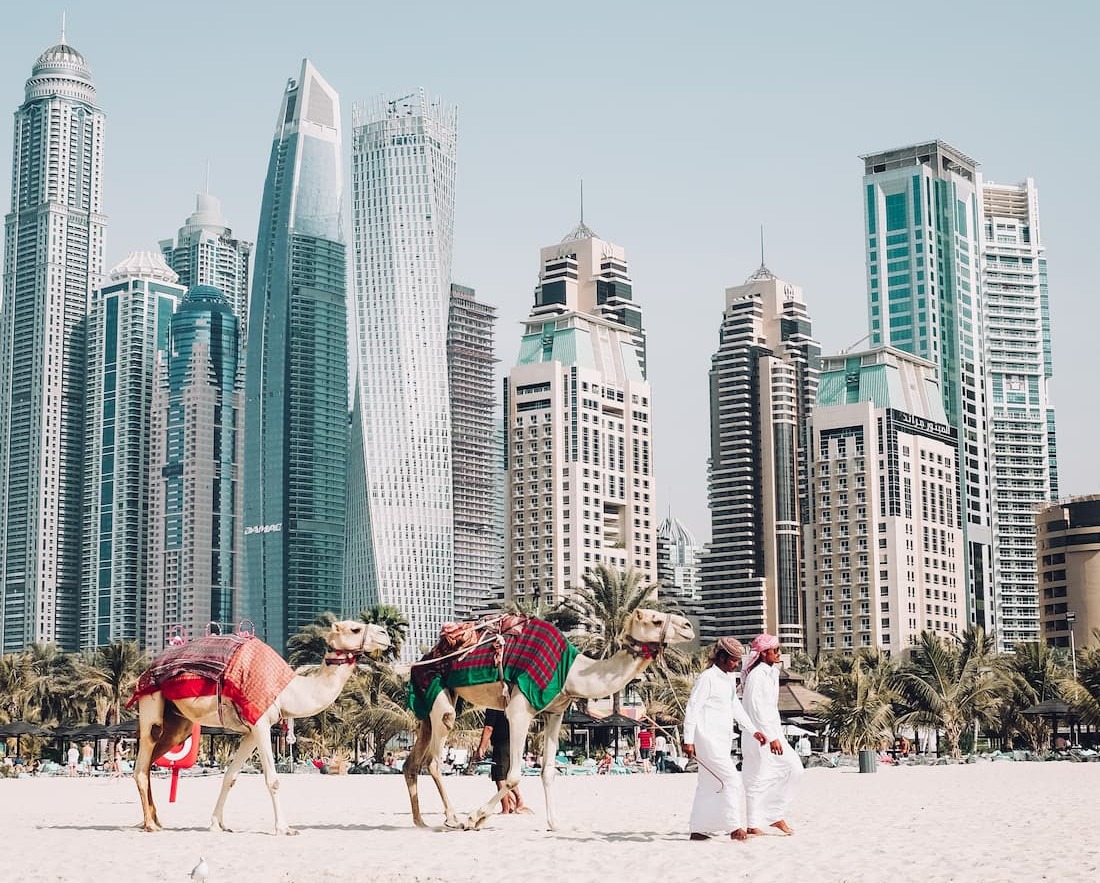
Where to get back to basics in the UAE’s glitziest city.

It’s a city known for excess, home to the world’s tallest building (the 2,722ft Burj Khalifa), biggest mall (the 12m sqft Dubai Mall) and deepest swimming pool (the 60m Deep Dive Dubai). But away from the hotels decked out in gold leaf and the cocktails priced at 2,400AED (£525 / $654 / 622 Euro), Dubai also boasts some equally jaw-dropping natural riches. Jump in your hire car (we’d recommend an SUV) and head out of town to be wowed all over again.

  • Swap your room key for some tent pegs at a desert campsite.

You’ll have to forgo your complementary buffet breakfast but if you want to wake up to sunrise over sand dunes and fall sleep to the sound of…absolutely nothing at all, a desert camping trip is a must. Liwa, in the vast expanse of Dubai’s Empty Quarter is the ultimate place to get off-grid, with nothing but miles of sand wherever you look. If that’s a little too remote for you, head to tranquil Al Dhafra Beach, where you can enjoy close-up views of turtles and other marine life as well as getting stuck into some of the best kayaking and snorkelling around.

  • Channel your inner Bear Grylls on a mountain survival workshop

Would you know what to do if you became stranded in a harsh outdoor environment? Could you make a fire? How about navigating a way out? In complete contrast to the ritzy hotels and bars of central Dubai, a number of hands-on day courses take participants out into the wilderness to learn everything from survival psychology to what to pack in an emergency kit. You’ll learn how to make a shelter, send emergency signalling and find a source of water. OK, you’ll probably never need any of it but think how impressed your friends will be next time you go camping.

  • Get up close and personal with flamingos at a tranquil nature reserve.

It’s hard to believe the Ras Al Khor wetlands are just a few metres from the buzz of downtown Dubai. Step into this extensive reserve and you’ll find a peaceful oasis where flamingos, grey herons, great egrets, cormorants, sandpipers and many more birds flutter and strut. The wetland spans 6.2sqm and includes mangroves, mudflats and saltflats where the birds make their habitats. Hole up in one of three bird hides and spend a relaxing afternoon surrounded by nature before heading back to the manmade splendour of the city.

Raring to go? You’ll be on the road in no time when you book your UAE rental car in advance for collection at Dubai airport.
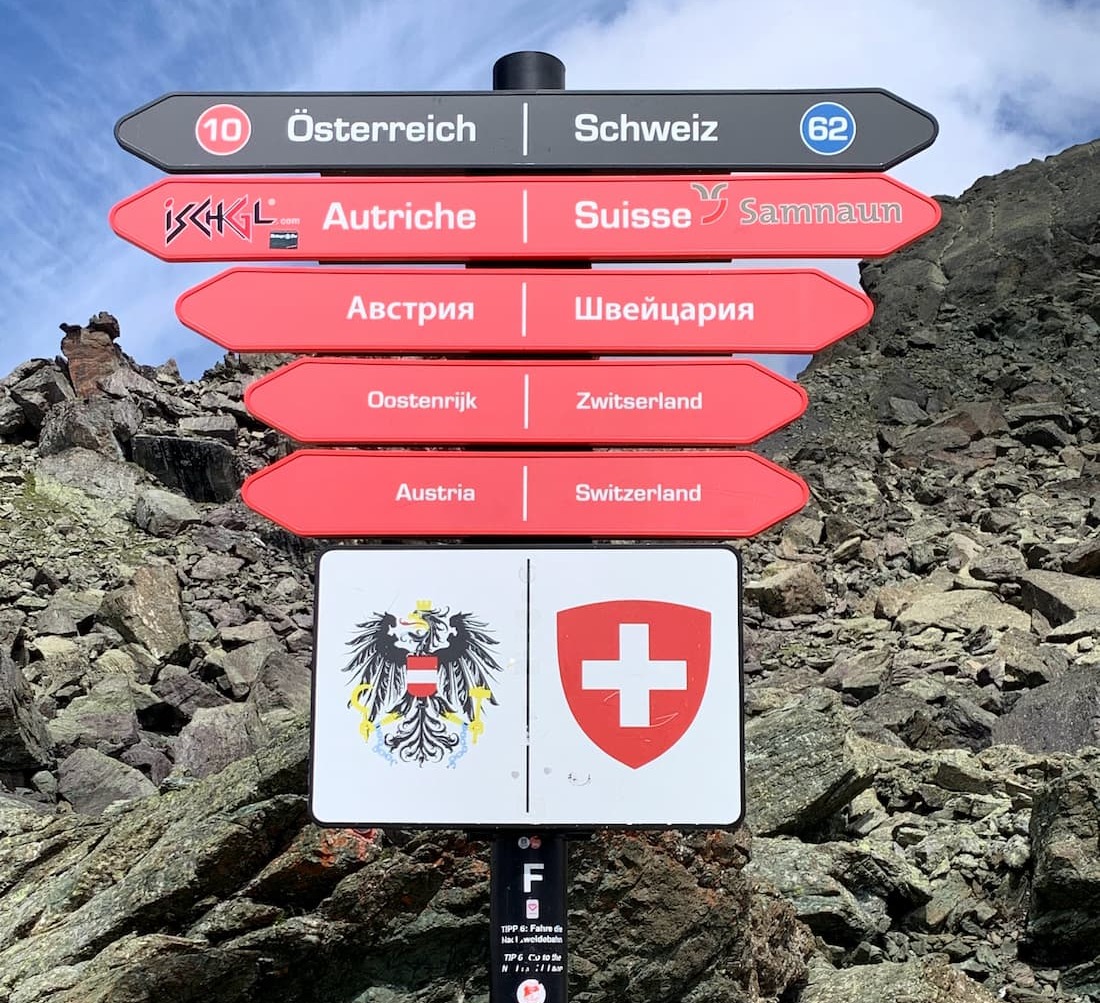
 

Where to ski the ‘duty-free run’ from Austria to Switzerland – and other cross-border trips.

Yes, it really is possible; you can pick up your skis in one country and a few hours later enjoy apres-ski in another. And there’s nowhere better for a spot of cross-border skiing than Austria, which sits in the heart of Europe bordered by no less than eight other countries, including Switzerland, Germany, Italy and the Czech Republic. Ready to try it out for yourself? Here’s where to go…

  • For a super-easy introduction to cross-border skiing, head to the Austrian resort of Ischgl, just over an hour’s drive from Innsbruck Airport. From here you can ski straight across to Switzerland taking in miles of fantastic scenery. The best part? The 13km route is dubbed the ‘duty-free run’ because it ends up in Samnaun, Switzerland’s only duty-free town. If you can carry them along with your skis, you can pick up your personal allowance of 200 cigarettes and a litre of spirits.

  • Schnitzel for lunch, puttanesca for dinner? At East Tyrolean ski resort Sillian-Turntaler it’s possible to ski from Austria to Italy via the Hochpustertal, a 100km long valley in the Alps. It’s even quicker to cross the border by car – but not quite as exciting, of course.

  • Want to make it a hat trick? The Carinthian-Slovenian Alps cover Austria, Slovenia and even a small part of Italy, making it possible to ski in three different countries in one trip. If you’re interested, make sure to pick up a Julian Alps International Ski Pass, which will give you access to three Austrian ski resorts, five in Italy and seven in Slovenia. 

Spend more time on the slopes and less time getting there by booking your Austria rental car in advance. Whether you need a spacious 4×4 or a zippy compact, we scan all available offers to get you the best deal. 


Hallou, is it mi you’re looking for? Five fun facts about Cyprus’ most famous export.

Last year Cyprus was successful in its bid to win halloumi protected destination of origin (PDO) status – meaning that only cheese actually made in Cyprus can be sold in the EU. But how much do you know about the salty, squeaky treat? If you’re heading to Cyprus you’ll want to brush up your knowledge because you’re going to be eating a lot of it. Read on for some of the essential facts about this most celebrated of cheeses.

  • It’s got serious history.

Cypriots first began making halloumi from sheep and goat milk back in the Byzantine period (395 – 1191 BC). Locals relied on the cheese as a source of protein and communities would often work together to produce it. In the days before food could be refrigerated, the salty brine in which halloumi is preserved enabled it to be kept fresh for a long time. It is such an integral part of Cyprus’ culture that it is even the basis of Cypriot surnames including Hallumas and Hallumaki. 

  • Brits cannot get enough of it.

Halloumi is loved all over the world. The Italians call it calumi, the Turks hellim and Arabs hellum. But in Britain – the biggest importer of the cheese – it is something close to a national obsession. The British consume more than 12,000 tonnes a year and when stocks have been low, or the supply chain disrupted, UK newspapers have responded with headlines describing it as a ‘crisis’ and questioning how the country will survive. So know this – you may take a Brit’s cornflakes, even their teabags, but you will never take their halloumi.

  • You don’t have to grill it.

Although halloumi is usually served grilled, when it becomes deliciously squidgy yet doesn’t melt away, in Cyprus many people prefer to eat it uncooked. You’ll often find the raw cheese paired with fresh watermelon on the menu at local tavernas, where the saltiness is perfectly balanced by the refreshing sweet fruit. It is also common to find it grated over hot food – much like parmesan in Italy. 

  •  There’s a reason it squeaks when you eat it.

Anyone who’s ever tried halloumi will have noticed the characteristic squeak it gives off when you bite into it. The scientific reason for this is to do with the cheese’s long protein strands rubbing on the enamel of your teeth. Mmmm. It’s possible to stop the squeak, or at least reduce it, by slicing it thickly rather than thinly and ensuring you don’t overcook it. Three minutes is perfect. 

  • There’s nothing quite like eating it fresh in Cyprus.

However many times you’ve enjoyed halloumi in the past, nothing compares to eating it directly from the producer in its sunny birthplace. Why not join a tour to one of the villages where it has been produced for centuries and taste it straight from the pot? There are dozens of excursions available from popular destinations such as Ayia Napa, Limassol, Larnaca and Nicosia where you can even learn how to make the cheese yourself – perfect for sating those cravings when you’re back home.

Feeling hungry? Make your journey to halloumi heaven even swifter by booking your Cyprus hire car in advance. With pick-up points at Larnaca and Paphos Airports you can be eating cheese in the sun almost as soon as the plane touches down.


Bulgaria on a budget: five ways to get the best deals (no haggling allowed).

Bulgaria is repeatedly rated as one of Europe’s best value travel destinations and is a popular choice for low-cost beach holidays and city breaks. But that doesn’t mean it can’t be even better value. Read on for our guide to getting the best bang for your Bulgarian buck…  

  • Don’t haggle – even at a market

Unlike neighbours Greece and Turkey, Bulgarians don’t do bargaining and may be offended if you offer less than the asking price. If you want to get the best deals, try charm; learning a little Bulgarian goes a long way, even better if you also have some knowledge of the country’s history and culture. 

  • Pay with the local currency.

Yes, Bulgaria is part of the EU and Euros are widely accepted but you’ll usually pay more if you choose this option. Instead, withdraw cash at an ATM in the local currency – the Bulgarian lev – when you arrive in the country. And if you’re paying by card, make sure you choose the lev as your currency.

  • Save on the sights with a discount card.

For around 20 lev (£9 / $11) you can buy a pass that gives you free travel on public transport as well as discounts on entry to museums and other attractions. The Sofia Card offers three days of unlimited travel plus discounted entry to the Museum of Natural History and the National Institute and Museum of Archaeology. The Plovidiv City Card offers cheap entry to Balabanov House and Plovdiv Roman Theatre among others, while the Varna City Card offers free and discounted admission to a huge range of attractions – plus a free beer tasting tour.

  • Consider visiting out of season.

If you’re not set on sunbathing, you’ll find the cheapest deals on Bulgarian holidays in the ‘shoulder seasons’ of January to April and September to December. Prices at renowned ski resorts including Bansko and Borovets are lowest just after Christmas and new year – and they are already the best value ski destinations in Europe according to Post Office Travel Money’s 2022 comparison. But the quieter shoulder seasons are also a great time for a city break in locations such as Sofia, Bourgas and Plovdiv where you’ll beat both the queues and the summer heat. 

  • Try before you buy on a free food tour.

Eating out is not expensive in Bulgaria but all that choice makes picking a restaurant even harder. Enter the free food tour – a restaurant hop through a city’s best eateries under the guidance of a local expert. Designed to showcase the wide range of cuisine on offer, you’ll be able to try complementary samples of national delicacies such as banitsa and boza as well as more unexpected dishes. Balkan Bites is the best-known tour in Sofia and takes in everything from traditional bakeries to Bulgaria’s first soup bar. It’s a great way to discover new foods at the same time as bookmarking a dinner spot for later.

Like getting good value? Then you’ll want the best deal on your Bulgaria hire car. We scan all available offers for your holiday dates to ensure your break never goes over budget.

How to avoid honeymooners in Mauritius.

White sand beaches; sunset catamaran cruises; private islands – Mauritius is a dream destination for romantics. But where do you go when you don’t want to share the shore with smoochy honeymooners? After all, there’s a lot more to this tiny Indian Ocean island than cosy cabanas and Instagrammable infinity pools. Here’s where to drive to escape the lovebirds and experience a more multidimensional Mauritius…

  • Flying Dodo Brewing Company, Bagatelle Mall, Port Louis.

Mauritius may be best known for rum but thanks to Flying Dodo, the island’s first and only microbrewery, it’s fast developing a reputation for craft beer too. Launched by the owners of Port Louis beer bar Lambic (sadly now closed), the brewery creates more than 20 new beers a year in batches of just 500L – so you’re guaranteed to taste something new every time. If you’re after an unusual souvenir, pick up one of their beer liqueurs, beer bonbons or a beer soap to take home.

  •  Blue Penny Museum, Caudan Waterfront, Port Louis

You don’t have to be a philatelist (aka a stamp collector) to enjoy Mauritius’ most famous museum. But it probably helps. After all, the rare postage stamps that give the museum its name are undoubtedly the stars of the show. Mauritius was the first British colony to issue postage stamps and the original examples on show here – issued in 1847 – are now worth around £3.8 million a pair. The museum is also packed with other exhibits and artefacts that showcase the island’s rich history and culture. Ready for a deep dive? Book a private guide to get the most out of your visit.

  • Mahebourg Market.

This weekday market, near Mahebourg village waterfront, was once the place locals went to pick up fine silk and other textiles. These days it’s a lively spot for bric a brac, local produce and street food. It’s at its biggest and busiest on a Monday, so set off early to explore stalls selling everything from Indian jewellery to traditional Mauritian musical instruments before breaking for lunch. The street food vendors here are among the best on the island and it’s a great place to try gateaux piments (chilli cakes), dhal puri (lentil pancakes) or saltfish, washed down with some fresh coconut water.

  • Tamarin Salt Pans

You may never have considered watching salt dry as a recreational pursuit. But the centuries-old natural sea salt pans in the village of Tamarin are kind of a big deal. The last place on Mauritius still harvesting salt by traditional methods, the pans are an important part of the island’s heritage and the people who work there the latest in a proud line of Mauritian salt farmers. If nothing else, the salt pans make an interesting diversion on the way to Tamarin’s famous grey-sand beach where you’ll find one of the most spectacular sunsets on the entire island. 

  • Bistro Moustache.

Who knows why moustaches abound on the celebrity portraits, menus and exterior of this French-style Tamarin restaurant and wine shop, but they do. It makes a kooky backdrop for a drink – the bistro serves gourmet wines by the glass or bottle direct from its adjacent shop – and a fun spot for dinner. Take your pick from an extensive Mauritian tapas menu including fresh Creole seafood  laced with spice and packed with flavour.

Need a ride? We can find the best deals on rental cars in Mauritius meaning you’ll not only get from A to B faster but more cheaply too.